“Circular” is one of those words that gets used a lot.
Circular products. Circular materials. Circular businesses. Circular everything.
For us at mellow designs, the interesting part starts when you ask a slightly more practical question: What actually happens to the materials when the space needs to change?
Can they stay in use? Can the product come apart? Can one broken part be replaced without throwing away everything around it? Can something be used for a completely different purpose for a while, then go back to what it was doing before?
Those questions shape a lot of how we design.
start with what already exists
One of our favourite circular design strategies is surprisingly simple: use things that already exist.
There are millions of products and components already moving through established systems every day. Pallets move goods around Europe. Scaffolding goes from construction site to construction site. These things already have a job, a supply chain and a reason to exist.
So we like asking: could they temporarily do something else too?
That idea sits at the heart of mellow joint.
A standard Euro pallet is designed for logistics. With mellow joint, the same pallet can temporarily become a bench, a table, a bar, a stage element or part of a larger event structure. Afterwards, the aim is for the pallet to go back into logistics and continue doing its original job.
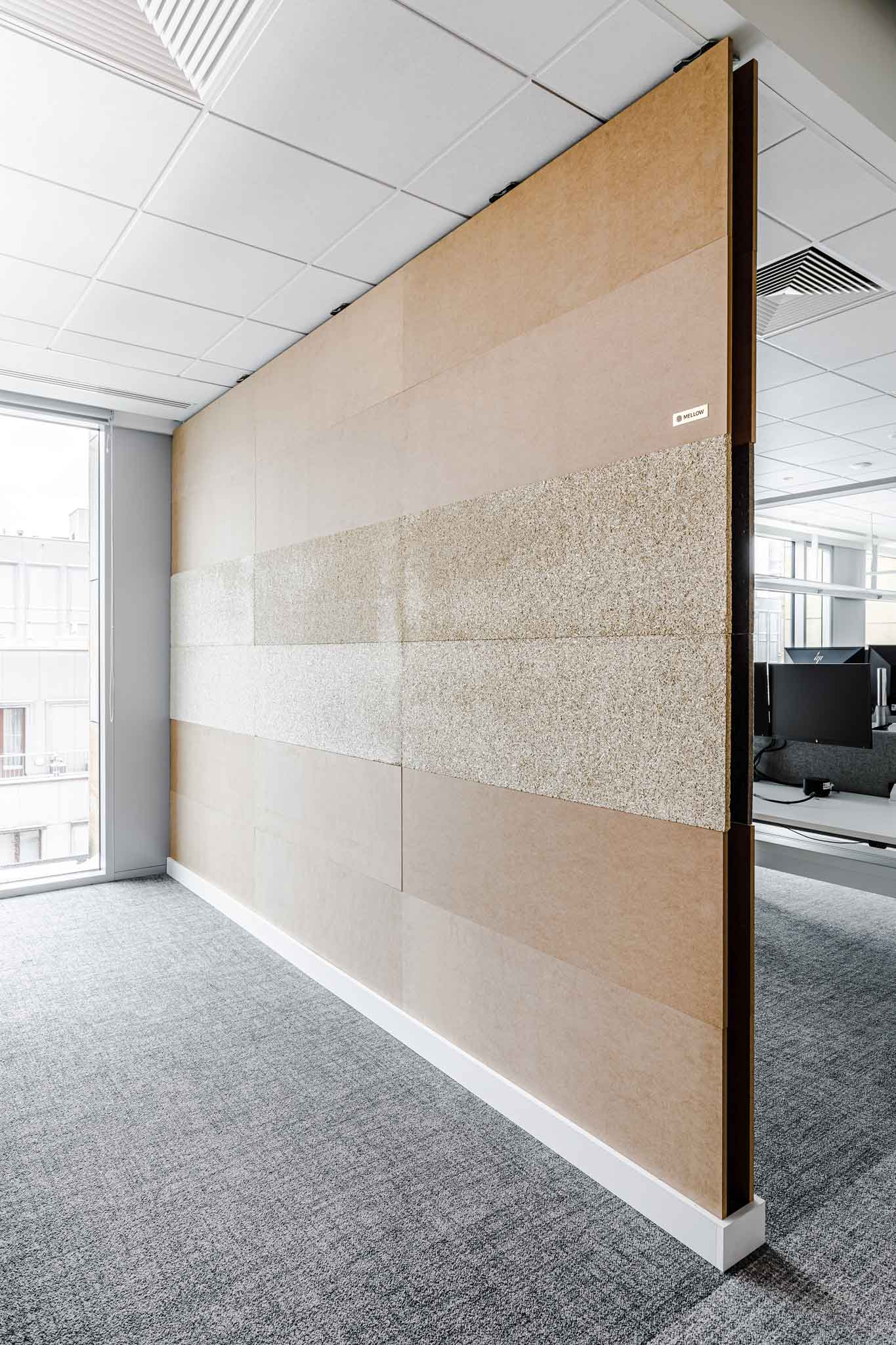
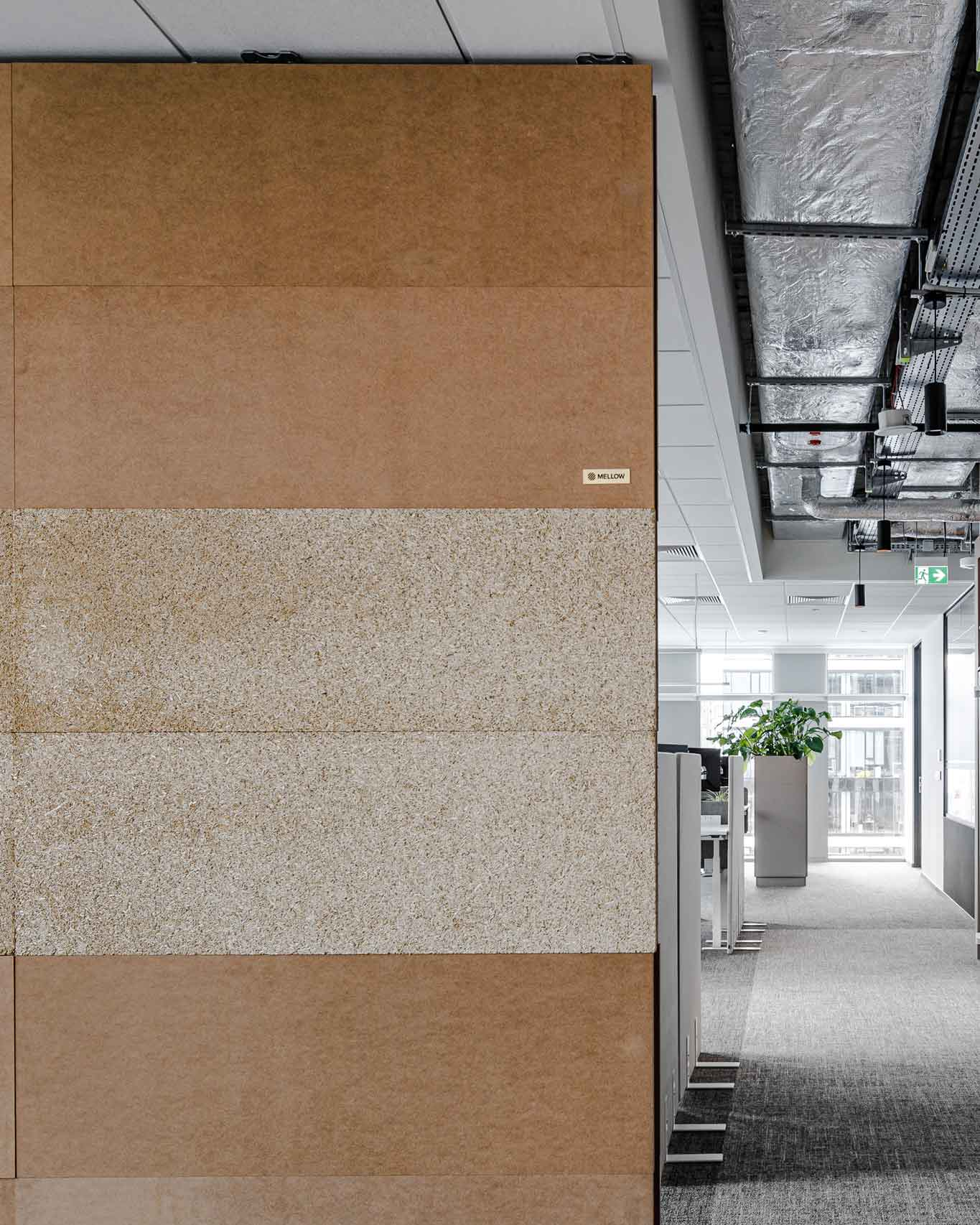
We apply the same thinking to mellow wall.
The current mellow wall development uses reusable scaffolding as its structural backbone. The scaffolding gains an additional function as part of an interior partition, while remaining a standard component that can continue to be used again.
There is something we really like about that. Instead of asking how much new material we can manufacture, we can start by asking how much more useful existing material can become.
spaces change. materials can stay.
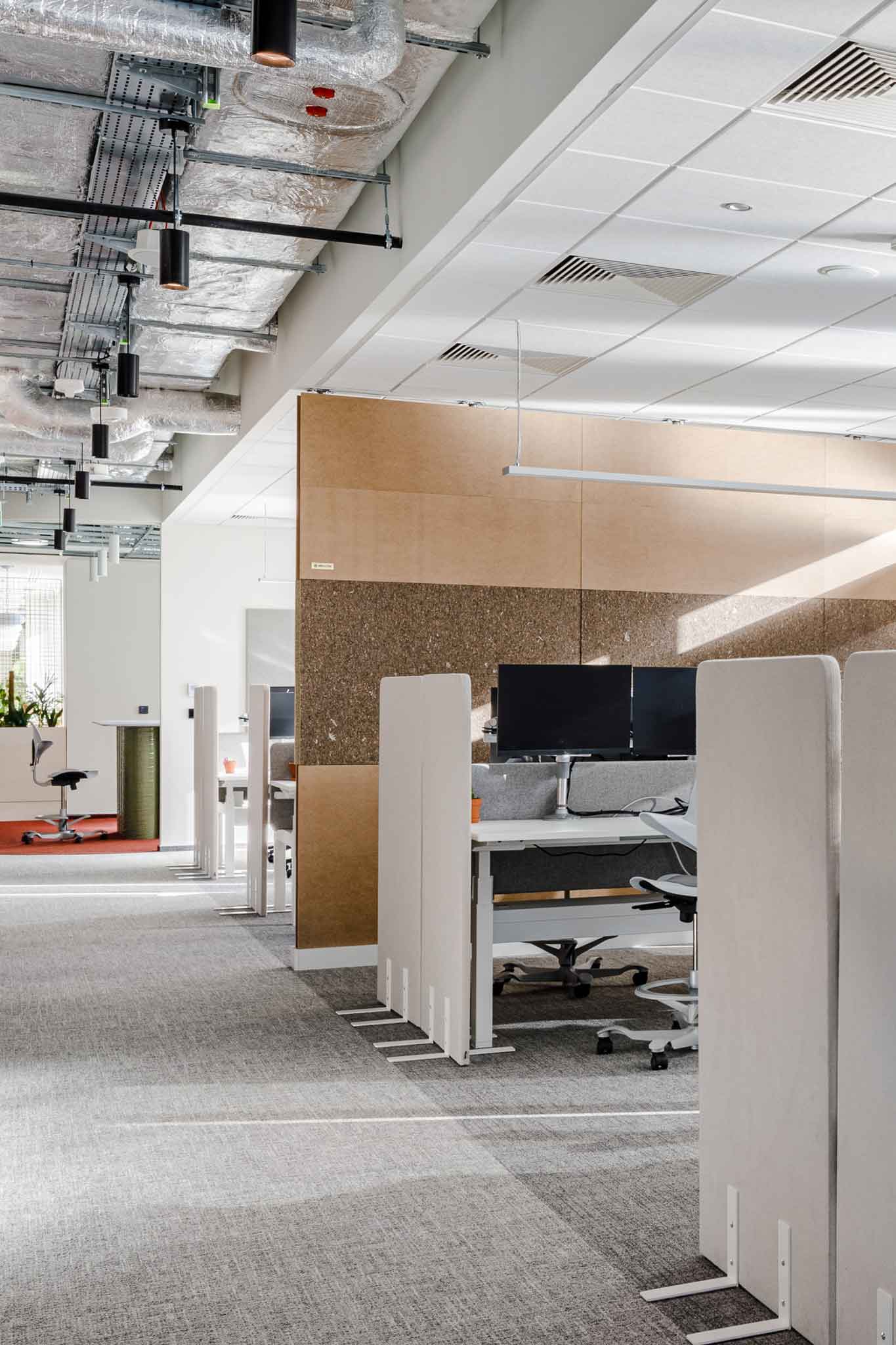
Interiors rarely stay the same forever. Teams grow. Offices shrink. A meeting room becomes a workshop space. A showroom becomes something completely different six months later. Anyone who has worked in an office for long enough knows that somebody will eventually decide that the wall is in the wrong place.
Traditionally, changing the layout can involve demolition, skips, new materials and another round of construction.
With mellow wall, we are exploring a different approach.
The wall is being developed so that it can be dismantled, moved, reconfigured and fitted with different panels. The structural components can keep circulating, while individual parts can be changed when needed.
The idea is pretty straightforward: changing the room should not automatically mean replacing the materials that created it.
designing things so they can come apart
A lot of circularity is decided at the connection point.
Glue two different materials permanently together and separating them later becomes difficult. Design a connection that can be opened again and suddenly repair, replacement and reuse become much more realistic.
This is why we spend a slightly unreasonable amount of time thinking about connectors.
Across our products, we increasingly work with a few practical principles: reversible connections, modular components, repeated assembly, replaceable parts and as little unnecessary permanent bonding as possible.
For mellow wall, this means developing mechanical connections that allow panels and structural elements to be removed independently. If one panel gets damaged or someone simply wants a different finish, the whole wall should not have to go with it.
It also gives us more freedom over time.
A wall installed today could potentially have a completely different appearance, layout or purpose later while keeping much of the same underlying structure.
That is where modularity becomes interesting. It gives materials more than one chance to be useful.
circularity keeps moving too
Our circularity policy is a working document because our products are still evolving.
We want to improve material traceability, strengthen supplier documentation, develop better lifecycle data and map realistic next-life pathways for our main components.
We are also exploring what circularity could look like beyond the product itself.
Because the most interesting version of circular design goes beyond making something that can theoretically be reused.
We want to understand whether it actually gets reused.
And then hopefully reused again.
And again.
And again.